
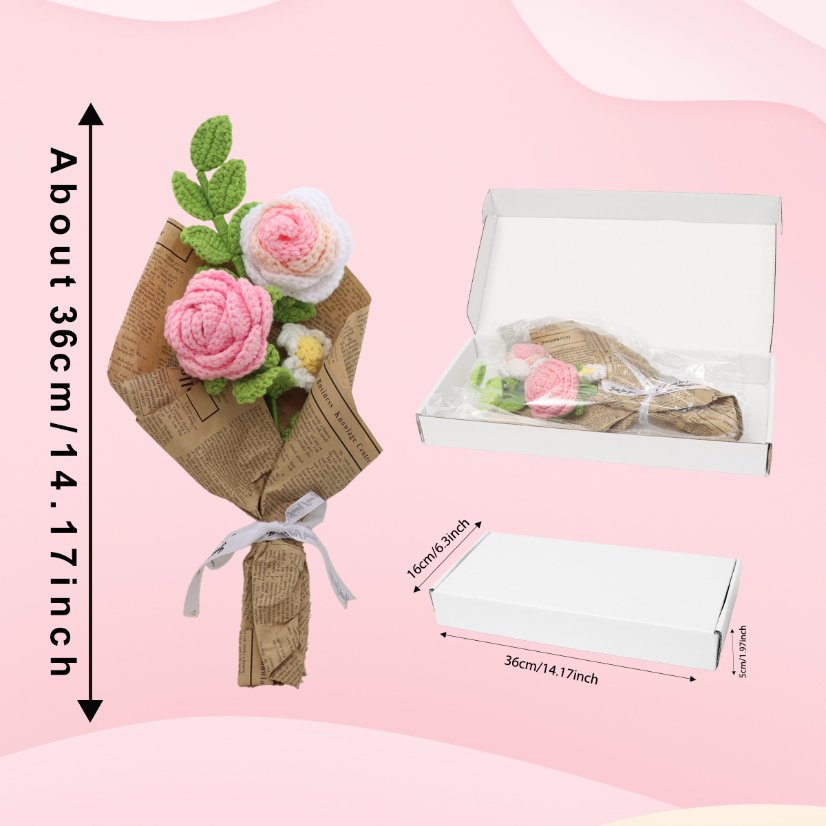
Approve a yarn bouquet’s appearance by connecting visible colour groups to named positions on an identified reference. Ask the supplier to return the offered model and sample revision with any changes marked. Guiyuan Crafts’ MXB03 catalogue board helps locate the enquiry; its picture does not establish a material composition, hidden stem count or confirmed colour assortment.
Keep the model and selected view together
A buyer comparing wholesale yarn bouquets should start with the actual model reference rather than a colour name alone. Attach the MXB03 product URL and the selected catalogue view. Ask the supplier to identify the version it offers so that the returned appearance record remains attached to the same arrangement.
The pink-and-white reference and the separate blue arrangement should retain distinct identities. Similar wrapping does not make their floral layouts interchangeable. If the supplier proposes another arrangement, keep it as an alternative instead of allowing a shared product category to replace the requested model without explanation.
Name positions without assuming hidden construction
Choose simple orientation terms that both parties can locate in the selected view. A buyer might identify an upper flower group, a central feature or a leaf area, then ask the supplier to mark the corresponding position. Keep the reference direction clear so that left and right do not change when an image is rotated in a message thread.
A visible flower head is not necessarily a separately supplied stem. Avoid deriving the complete construction or a count of hidden elements from the front view. If a quantity or component question matters, put it in a separate supplier enquiry. The appearance map should describe what is being compared, not invent a bill of materials.
Map field | Reference to identify | Supplier response
Model | Actual product entry and version | Confirm the offered arrangement
View | Named front/orientation reference | Use the same direction for comparison
Colour group | Visible flower or leaf area | Identify the proposed appearance
Position | Marked location on the reference | Match or explain a difference
Alternative | Changed group or arrangement | Return a separate proposed reference
Decision | Sample and accepted revision | Accepted, changed or unanswered
Keep colour names separate from evidence
Use colour names as enquiry descriptions until the supplier identifies its offered reference. An online image can help locate the intended appearance, but it is not a calibrated colour standard. Ask the supplier how it identifies the proposed colours and what reference a returned sample represents. Do not invent an exact shade code from a screen image.
Keep flower and leaf references in separate fields when their relationship matters to the arrangement. An overall colour description can otherwise conceal a change to one visible group. If the supplier offers a different combination, ask for that combination to be shown and identified rather than treating every gallery colour as an automatically available option.
Compare the returned sample against the same map
When a sample is supplied, record its identifier and the model revision it represents. Use the same named view for the comparison. Mark the location of any question and retain a picture that allows the supplier to understand the comment. A general response that the colour looks different is less useful than an identified area and a retained reference.
Separate an observation from an explanation. If a visible difference is unclear, ask the supplier to explain it or provide another identified view. Do not diagnose yarn composition, production technique or colourfastness from the photograph. This review concerns the appearance being offered, while those material or performance questions remain separate.
Record a limited approval decision
The final appearance record should state which model, sample and view were reviewed. Keep unresolved areas visible, including any reverse or hidden view that was requested but not supplied. An accepted front appearance does not confirm the complete supply contents, packing method, dimensions or any product-performance claim.
If the supplier changes the arrangement after review, request an updated reference and retain the earlier version. A changed flower group or leaf position should remain traceable instead of being absorbed into an unexplained statement that the bouquet is equivalent. Match the accepted appearance revision to the quotation before passing the record onward.
• Keep the actual model and selected orientation visible.
• Mark colour groups by position rather than guessing hidden stems.
• Retain the supplier’s sample and appearance references.
• Keep appearance approval separate from quantities, materials and packing.
Send an arrangement-map request
An enquiry can read: For the selected MXB03 reference, please identify the offered arrangement and return a view marking the visible flower and leaf colour groups. Keep the orientation consistent and show any proposed change separately. If a sample is supplied, link it to the same map and revision. Please mark unanswered areas. Send the enquiry through Guiyuan Crafts’ actual product and contact links.
Frequently asked questions
Can a buyer count supplied stems from the front image?
Keep that as a separate component question. Visible heads do not establish hidden construction or the complete quantity supplied.
Does the image define an exact shade standard?
It is a catalogue reference. Ask the supplier to identify the offered colour and sample basis rather than inventing a shade code.
What does an appearance approval cover?
The identified model, sample, views and visible groups actually reviewed. Other commercial or technical fields need separate confirmation.
Product and contact references
https://gycrafts.com/product/product-3/
https://gycrafts.com/product/product-2/
https://gycrafts.com/contact/
https://gycrafts.com/blog/